Dementia remains one of the most pressing public health challenges of our time, affecting over 55 million people globally. However, new insights from the 2024 Lancet Commission on Dementia Prevention, Intervention, and Care offer renewed hope. Their latest report concludes that up to 45% of dementia cases worldwide could be delayed or prevented by addressing 14 modifiable risk factors throughout life.
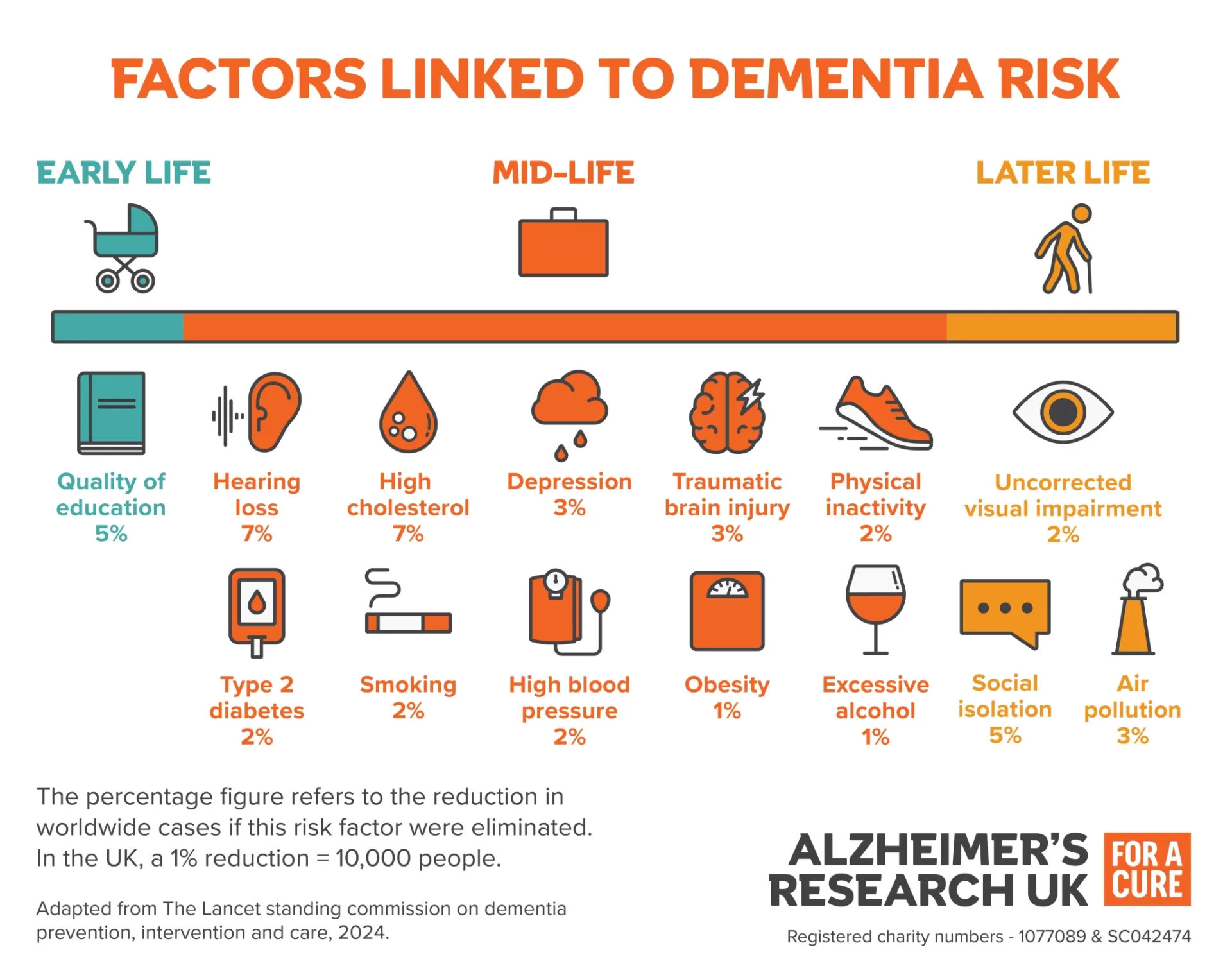
Two New Risk Factors Identified in 2024
The updated report builds on previous findings by adding two newly recognized contributors to dementia risk:
- Untreated vision loss
- High LDL (“bad”) cholesterol
These add to a list of 12 previously identified risk factors, ranging from less education in early life to social isolation in later years. The Commission’s life-course model underscores that different risk factors have greater impact at specific stages of life.
A Life-Course Model of Dementia Prevention
The Commission encourages a “life-course” approach to dementia prevention, organizing the 14 modifiable risk factors by the life stage during which they are most influential:
- Early life (before age 18):
- Less education
- Mid-life (ages 18–65):
- Hearing loss
- Traumatic brain injury
- Hypertension
- Alcohol misuse
- Obesity
- Smoking
- Depression
- High LDL cholesterol (new)
- Later life (65+):
- Social isolation
- Physical inactivity
- Diabetes
- Air pollution
- Untreated vision loss (new)
Why Mid-Life Matters Most
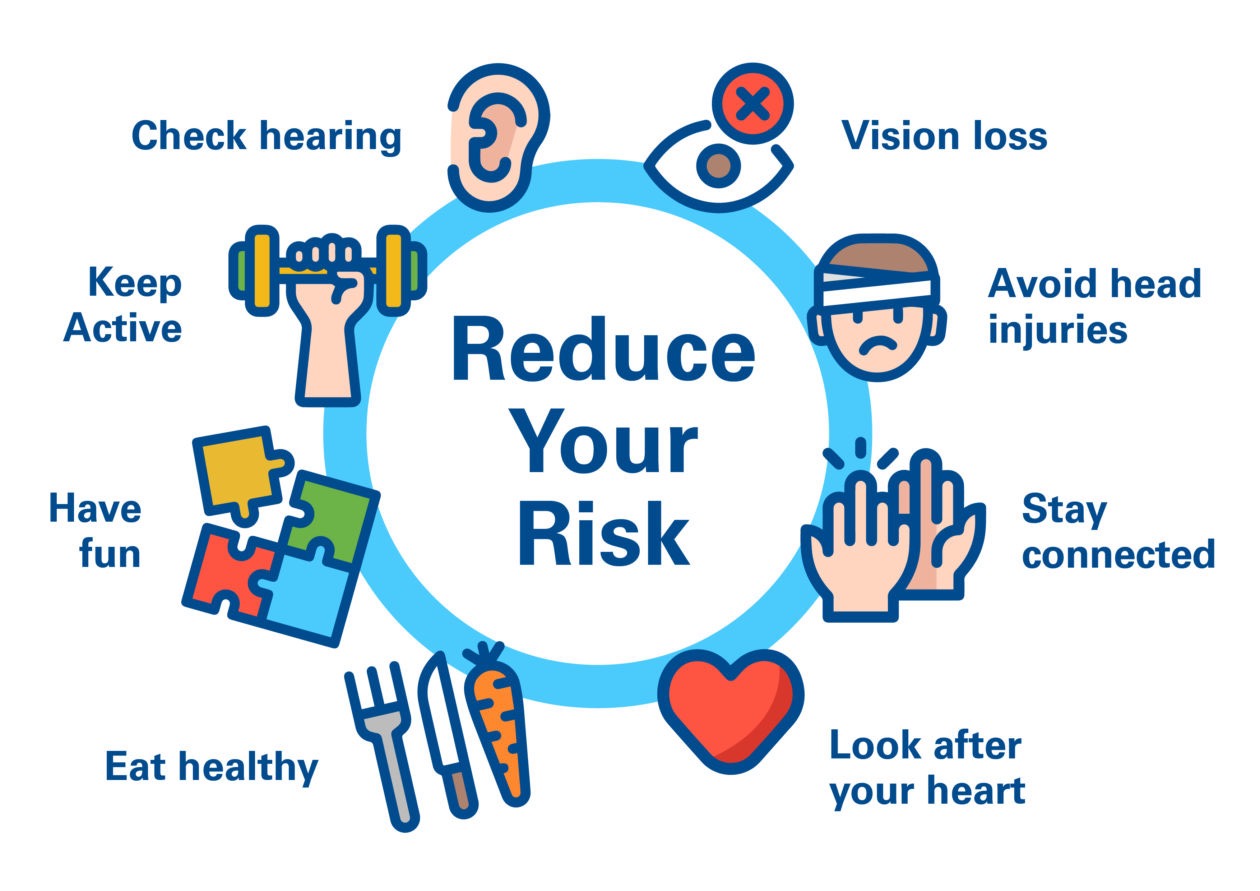
While all 14 factors are important, the Commission stresses that mid-life interventions offer the greatest opportunity to prevent or delay dementia. In fact, the majority of risk factors exert their most significant influence between the ages of 18 and 65. Therefore, healthier lifestyle choices—such as managing blood pressure, staying socially engaged, and treating vision or hearing issues—can ultimately have long-term protective effects. Moreover, adopting these habits early may reduce additional health complications later in life.
From Research to Action
Importantly, the report serves as a global call to action. It not only urges individuals to take proactive steps to reduce their personal risk, but also advocates for public health policies that support healthier environments. For example, key recommendations include:
Expanding access to quality education
Reducing air pollution
Promoting physical activity
Ensuring early treatment for hearing and vision loss
Improving cholesterol and blood pressure control
Furthermore, these collective efforts can help create communities that protect cognitive health for everyone.
Empowering Prevention Through Awareness
Dementia is not an inevitable part of aging. Indeed, the Lancet Commission’s 2024 findings strongly reinforce that prevention is possible—and in many cases, within reach. By raising awareness and actively addressing these modifiable risk factors—particularly during mid-life—we can significantly improve brain health outcomes for millions of people. Additionally, starting these conversations earlier can motivate families and communities to prioritize cognitive health.
At Precision Eye Care, we remain deeply committed to promoting cognitive wellness across the lifespan. Therefore, if you have concerns about memory, cognition, or dementia risk, we encourage you to talk to your healthcare provider about creating a personalized prevention plan.