
If you’re considering cataract surgery, your eye doctor has probably mentioned “astigmatism.” Knowing what this common condition is and how it affects your vision helps you choose the best treatment plan—especially since modern techniques can correct astigmatism during cataract surgery.
What Is Astigmatism?
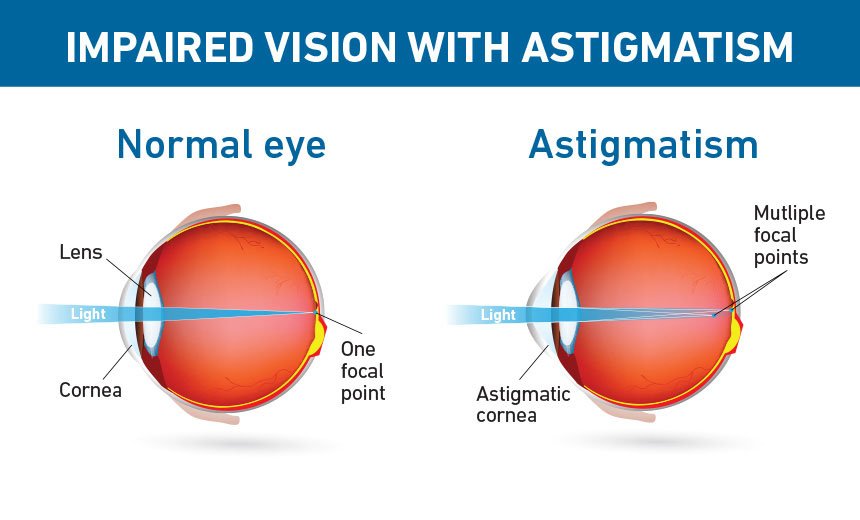
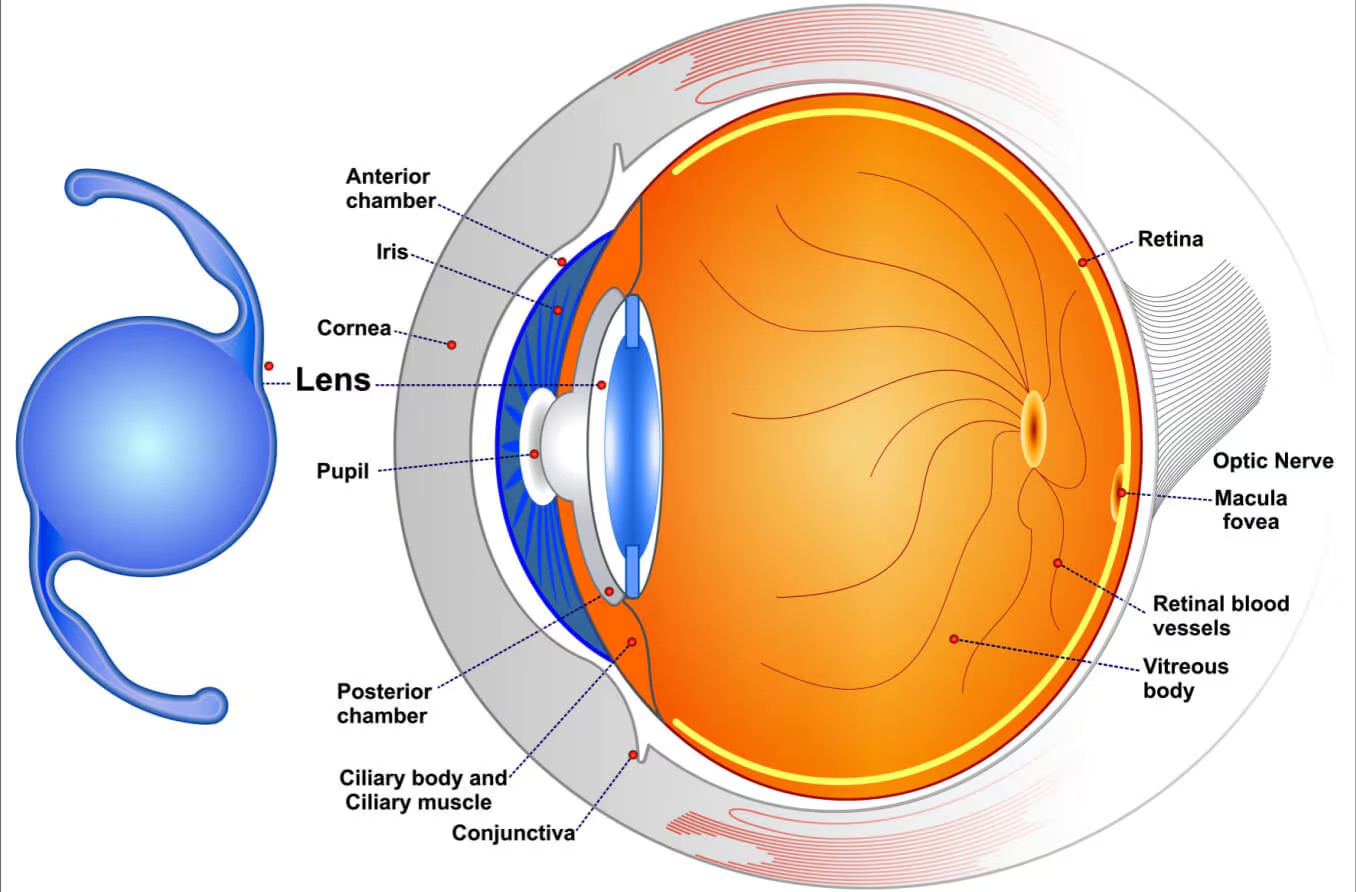 Astigmatism happens when the cornea (the clear front part of the eye) or the lens inside isn’t perfectly round. Instead of focusing light onto a single point on the retina, an eye with astigmatism creates two separate lines of focus. This causes blurred or distorted vision at all distances.
There are two main types:
Regular astigmatism: The cornea is shaped more like a football than a basketball, with two principal curves—one steeper than the other.
Irregular astigmatism: The corneal shape becomes uneven or distorted, often from scarring or conditions like keratoconus.
Both types can reduce visual quality, even if you don’t have other eye conditions.
How Common Is Astigmatism?
Astigmatism affects many people. Studies show over 70% of patients who undergo cataract surgery have at least 0.50 diopters (D) of astigmatism, and about 40% have more than 1.0 D. These amounts can cause noticeable vision problems if left untreated.
 Why Does It Matter in Cataract Surgery?
 Why Does It Matter in Cataract Surgery?
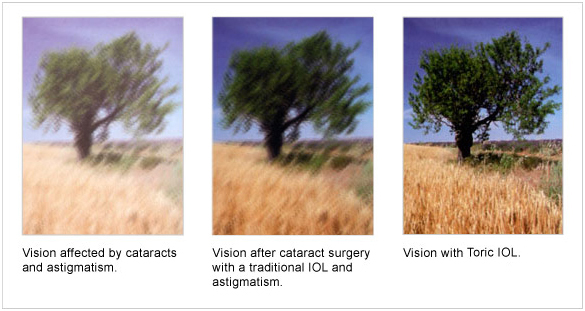
Cataracts cloud your natural lens, and cataract surgery replaces it with an artificial intraocular lens (IOL). If surgeons don’t correct your astigmatism during surgery, you may still need glasses or contact lenses afterward.
Thanks to modern advances, surgeons can now treat astigmatism at the same time using:
Toric IOLs: Special lenses that correct regular astigmatism.
Limbal relaxing incisions (LRIs) or laser-assisted arcuate incisions: Procedures that reshape the cornea to reduce astigmatism.
Your surgeon will measure your astigmatism and check whether it’s with-the-rule (vertical), against-the-rule (horizontal), or oblique (diagonal). Based on these findings, they’ll suggest the best option.
Will Astigmatism Change Over Time?
Yes. Corneal astigmatism often changes with age. In younger people, the cornea usually steepens vertically (with-the-rule). After age 50, it often flattens vertically and steepens horizontally (against-the-rule). This natural shift helps your surgeon decide on the best correction method.
What to Expect After Surgery
When surgeons correct astigmatism properly during cataract surgery, many people see 20/20 or close to it without glasses. However, complete correction isn’t always possible, especially if you have irregular astigmatism. Your surgeon will review your measurements and help you set realistic expectations.
 Takeaway
 Takeaway
If you have cataracts and astigmatism, you’re not alone. Learning about your condition helps you make confident choices. Ask your surgeon about the amount and type of your astigmatism and whether correction during surgery suits you. The good news: modern cataract surgery could give you clearer, sharper vision—and maybe even reduce your need for glasses.